
PDM Ponte da Barca, Municipal Master Plan of Ponte da Barca
In Ponte da Barca, about 4% of the territory is urban land under the current PDM. See what you can build, where, and the rural zones with the most reclassification potential.
PDM changes
Every amendment to municipal master plans, straight from the national registry (SNIT). Pick a district, municipality or parish on the map to scope this list; click a row to see it on the map.
| Municipality | District | Change | Publication | Date |
|---|---|---|---|---|
| Loading… | ||||
Status of the PDM of Ponte da Barca
PDM of Ponte da Barca in force in 2026: Revisão published as AVISO 9043/2013 on 15 July 2013.
- Plan in force
- Municipal Master Plan of Ponte da Barca (SNIT instrument no. 2055) Official register
- Publication
- Revisão, AVISO 9043/2013, 15 July 2013 Diário da República (PDF)
- Latest published act
- Exceção à Suspensão nos termos do Rjigt - n.º 3 do art.º 199.º, AVISO 7744/2025/2, 24 March 2025 Diário da República (PDF)
- Amendments
- 8 acts published in total, 5 under the plan in force
How to confirm a revision or amendment
A revision or amendment only takes effect when it is published in the Diário da República. Check the PDM page of the Câmara Municipal de Ponte da Barca, which announces procedures under way, and the SNIT register of the DGT, which lists every published act. The PCGT platform publishes the procedures in progress.
Source: SNIT register (DGT), synchronised on 25 August 2026. Acts published after that date may not appear yet.
Where can you build in Ponte da Barca?
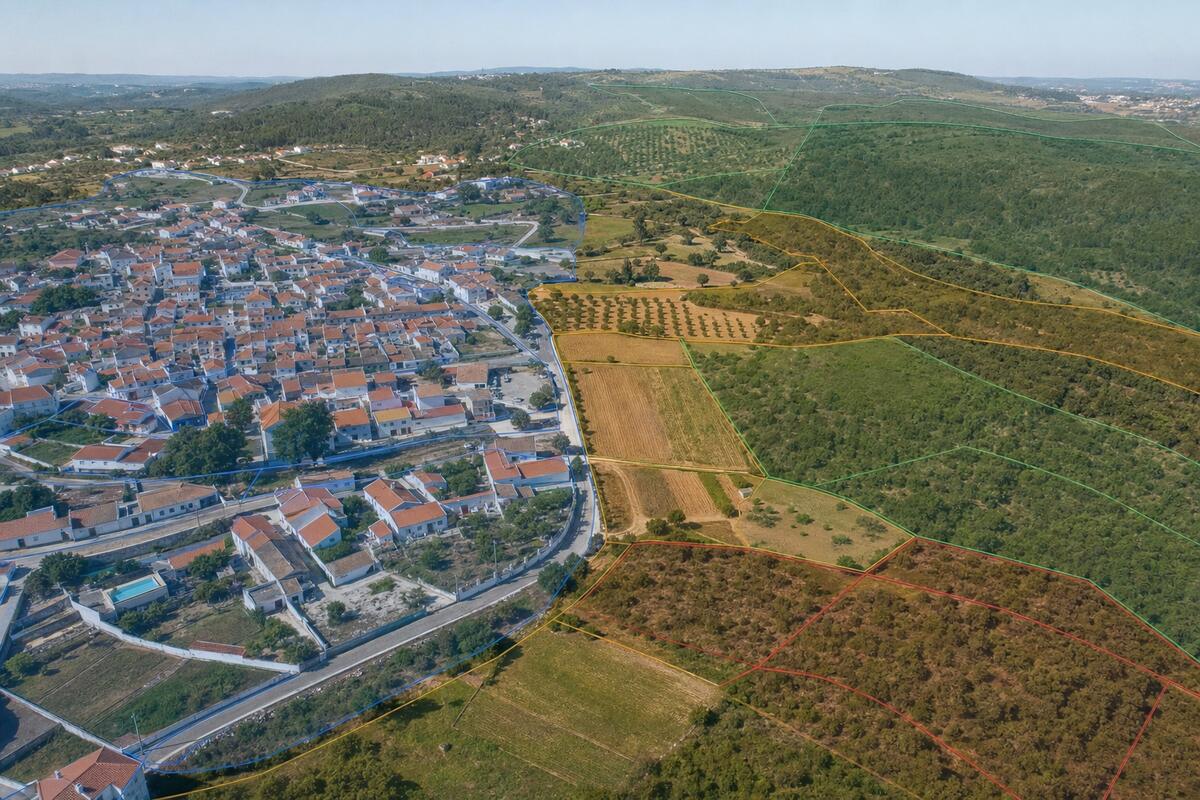
In Ponte da Barca, about 4% of the territory is classified as urban land under the current PDM. That is where construction is generally allowed. The rest is rural land, where building is limited to the plan's exceptions. Ponte da Barca's Municipal Master Plan organises the area into 545 zones and has 8 acts published in the Diário da República. The most recent, on 24 March 2025, is an exception to a suspension (AVISO 7744/2025/2).
For rural plots next to already-urbanised areas, Portugal's Lei dos Solos opened the door to reclassification as urban land. Use the zoning map below to locate your plot and confirm its classification.
Land categories in Ponte da Barca
The PDM of Ponte da Barca classifies 18 070 ha: 747 ha of urban land (4%) and 17 324 ha of rural land (96%). Each class is split into categories that set what can be built. The ones with the most area:
| Class | Category | Hectares | Share |
|---|---|---|---|
| Solo Rústico | Solo Rural | 17 226 | 95% |
| Solo Urbanizável | Solo Urbanizado | 692 | 4% |
| Solo Rústico | Indefinida (Albufeira | 96 | <1% |
| Solo Urbanizável | Solo Urbanizável | 55 | <1% |
| Solo Rústico | Indefinida (Albufeira) | 2 | 0% |
Shares of the area classified by the PDM, from the CRUS dataset of the DGT. Water bodies and roads the plan leaves unclassified are not counted.
Constraints in Ponte da Barca: RAN and REN
Besides the land classification, the PDM of Ponte da Barca is subject to public easements and restrictions. According to the DGT maps, about 15% of the municipality is in the National Agricultural Reserve (RAN) and 54% is in the National Ecological Reserve (REN).
The RAN protects the soils with the highest agricultural capability. Building in RAN requires a favourable opinion from the regional agriculture authority and, as a rule, is only admitted for agricultural uses or works of public interest.
The REN protects sensitive areas such as flood plains, the coastal strip, unstable slopes and aquifer recharge zones. Building in REN is forbidden, except for the uses the law allows, which depend on prior notice to or authorisation from the regional CCDR.
These shares come from the RAN and REN maps published by the DGT and can overlap urban land. Always confirm a specific plot on the PDM constraints map and on the map above.
Regulation and official documents
The binding text is the regulation published in the Diário da República. The zoning and constraints maps (planta de ordenamento, planta de condicionantes) are consulted on the municipal geoportal, and the full record of the plan and its amendments is kept by the DGT.
- PDM regulation of Ponte da Barca, Diário da RepúblicaRevisão · AVISO 9043/2013
- Official register, SNIT (DGT)Instrument no. 2055
- Municipal council websitecmpb.pt
Median price per m², typology breakdown, parish comparison and rental yield.
Other municipalities in Viana do Castelo
- Arcos de Valdevez13% urban · 3081 zones
- Caminha11.6% urban · 952 zones
- Melgaço4.3% urban · 2113 zones
- Monção17.4% urban · 656 zones
- Paredes de Coura9% urban · 1489 zones
- Ponte de Lima14% urban · 2473 zones
- Valença23.9% urban · 2612 zones
- Viana do Castelo21.3% urban · 2041 zones
- Vila Nova de Cerveira16.8% urban · 548 zones